Protein discovery sheds light on scarring diseases
UK and US scientists have uncovered an important piece of the puzzle on the signalling pathway that causes damaging scar tissue to build up in the body, raising hopes for future treatments.
Published in on 5 August, the University of Manchester and University of Connecticut team has revealed how a little-known protein helps keep one of the body's most powerful biological signals under tight control.
Their findings could eventually help researchers develop new ways to tackle conditions linked to fibrosis, a process in which excessive scar tissue forms in organs and prevents them from working properly.
Fibrosis can affect the lungs, liver, kidneys and other organs, and is thought to contribute to millions of deaths worldwide each year.
At the centre of the discovery is a signalling molecule called transforming growth factor beta, or TGF尾.
This molecule plays a vital role in the body, helping cells grow, communicate with each other, respond to injury and repair damaged tissue.
However, when there is too much active TGF尾 it can trigger the build-up of scar tissue, contributing to a range of serious diseases.
Because of its powerful effects, the body normally keeps TGF尾 locked away in an inactive state until it is needed.
They used advanced imaging, called cryo-electron microscopy, engineered human cell lines and 3 dimensional聽 computer simulations to reveal how a key protein regulates TGF尾 activity.
The study revealed for the first time how a protein known as latent TGF尾-binding protein 1, or LTBP1, helps build and stabilise this storage complex.
The researchers discovered that LTBP1 does far more than simply hold TGF尾 in place.
Instead, it acts as a key regulator, helping to keep the molecule safely stored while also influencing how it is released.
The team showed how LTBP1 forms a crucial connection with TGF尾 and helps determine how much physical force is needed before the signalling molecule can become active.
This mechanical control system ensures that TGF尾 is only switched on in the right place and at the right time.
The findings provide an important new understanding of how the body regulates one of its most influential signalling pathways.
TGF尾 is one of the body's most important signalling molecules because it influences how cells grow, communicate and repair tissue. But when its activity is not properly controlled, it can contribute to diseases such as fibrosis, where excessive scar tissue damages healthy organs
The scientists believe the work could help guide future efforts to develop treatments that selectively control TGF尾 activity in disease.
Lead author Professor Clair Baldock from The University of Manchester said: 鈥淭GF尾 is one of the body's most important signalling molecules because it influences how cells grow, communicate and repair tissue.
鈥淏ut when its activity is not properly controlled, it can contribute to diseases such as fibrosis, where excessive scar tissue damages healthy organs.
鈥淥ur study has revealed in unprecedented detail how LTBP1 helps store and regulate TGF尾, and how the structure of this protein complex affects the forces needed to activate it.
鈥淏y understanding this process more clearly, we have uncovered a new layer of biological control that could help researchers develop more precise therapies in the future.鈥�
鈥淲别听 hope our discovery will provide a foundation for future studies aimed at preventing harmful scarring while preserving the body's normal repair mechanisms.鈥�
- The Structural basis for the contribution of latent TGF尾 binding protein to TGF尾 latency and activation is published in on 05/08/26 DOI
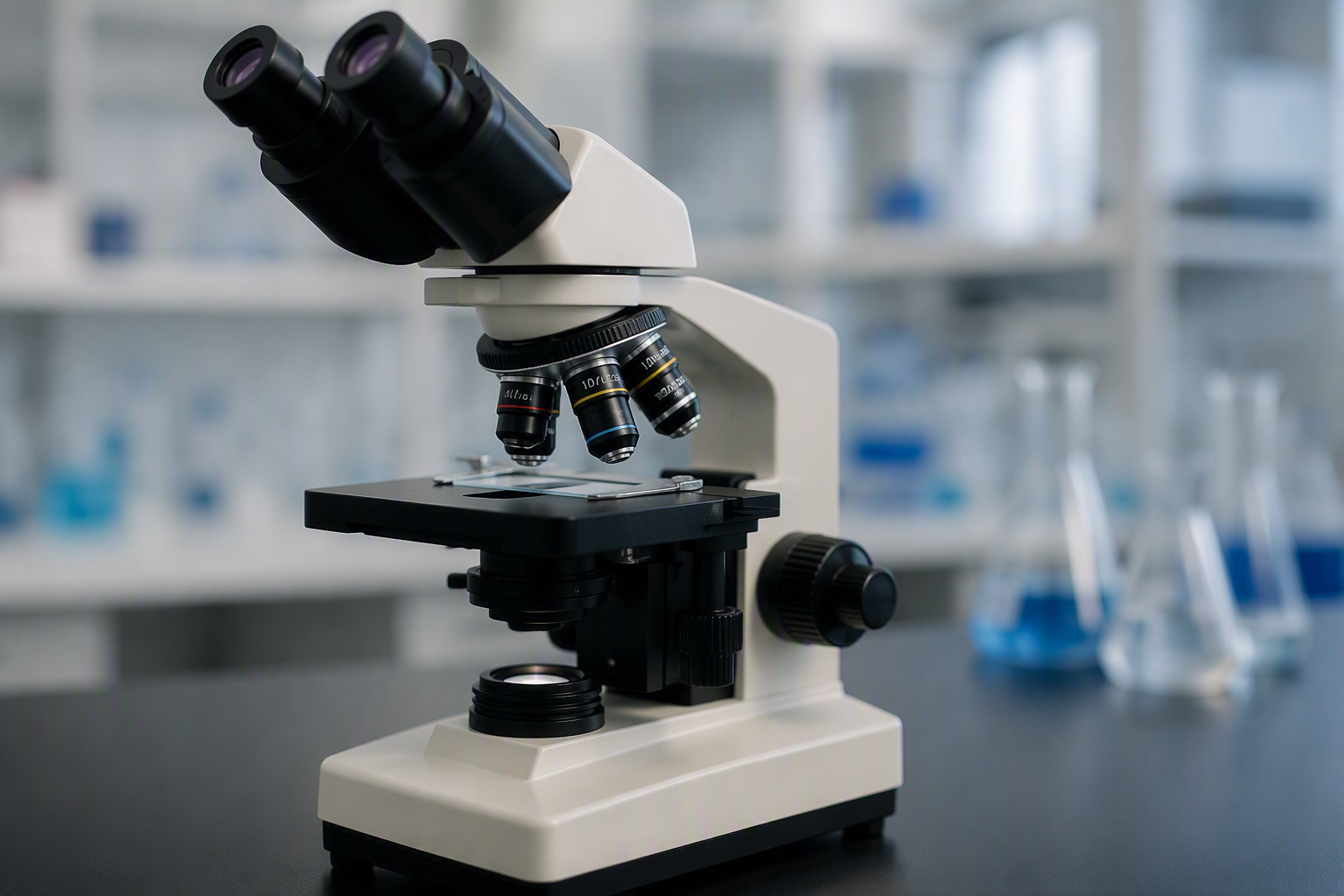
- Image of microscope created with AI
- The study was funded by the Biotechnology and Biological Sciences Research Council and The Wellcome Trust.