Strike against mask wearing in 1930s echoed COVID-19 protests, study finds
New research from The University of Manchester has shown that debates and resistance about wearing face masks go back a lot further than the COVID-19 pandemic.
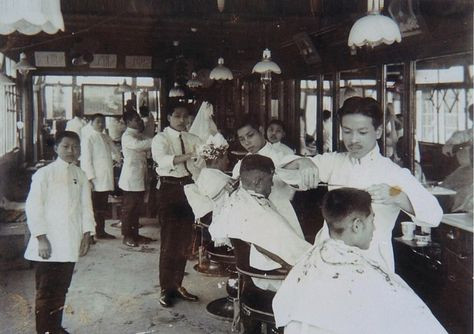
Dr Meng Zhang, a Wellcome Trust Research Fellow at the University鈥檚 , found that barbers went on strike against compulsory mask-wearing rules in 1930s China, arguing that they were unfair, uncomfortable and discriminatory.
The research, published in the journal, shows how these little-known protests mirror some of the arguments seen around mask mandates during the pandemic a century later. His study reveals that while governments promoted masks as a public health necessity, some groups pushed back - framing them as intrusive or unjust.
鈥淛ust as we saw in the 2020s, masks in 1930s China became more than a medical object,鈥� Dr Zhang explains. 鈥淭hey were about politics, identity and social hierarchy as much as hygiene.鈥�
The protests began in Jiujiang, a Yangtze River port city, during the hot summer of 1936. Local officials ordered barbers to wear masks to stop the spread of tuberculosis and other airborne diseases. Barbers complained that in the stifling heat the masks made them feel like they were being 鈥渕uzzled like animals.鈥� Through their labour union, they went on strike, gaining attention in Chinese and international newspapers.
Similar tensions played out elsewhere. In Beijing, strict policing meant barbers rarely staged open strikes, but many resisted quietly by wearing masks only when inspectors were present. Eventually, in Jiujiang, the dispute ended in compromise - barbers agreed to wear them during close facial shaving, when the risk of spreading disease was highest.
Dr Zhang stresses that these barbers were not rejecting science - instead, they were protesting against what they saw as unfair targeting of their profession. At the time, barbers were often considered socially inferior and singled out as possible spreaders of disease. The mask orders reinforced that stigma.
His research also shows how labour unions gave barbers the ability to organise and negotiate with the state - something that shaped both the protests and their outcomes.
The parallels with the COVID-19 pandemic are clear 鈥� in both instances mask-wearing was tied up with questions of fairness, enforcement and the balance between public health and personal experience. During the pandemic, barbers were once again pulled into mask policy, and this time they were also expected to enforce the rules on their customers.
鈥淏y looking back at forgotten struggles like this, we can better understand why people resist public health measures today and how governments can respond to them more fairly,鈥� said Dr Zhang.
History reminds us that when public health policies are rolled out without listening to the people most affected, they risk creating resentment rather than compliance - recognising this can help us design health measures that protect everyone while minimising unnecessary conflict.
DOI: