Scientists synthesise rare four‑nitrogen chain anions
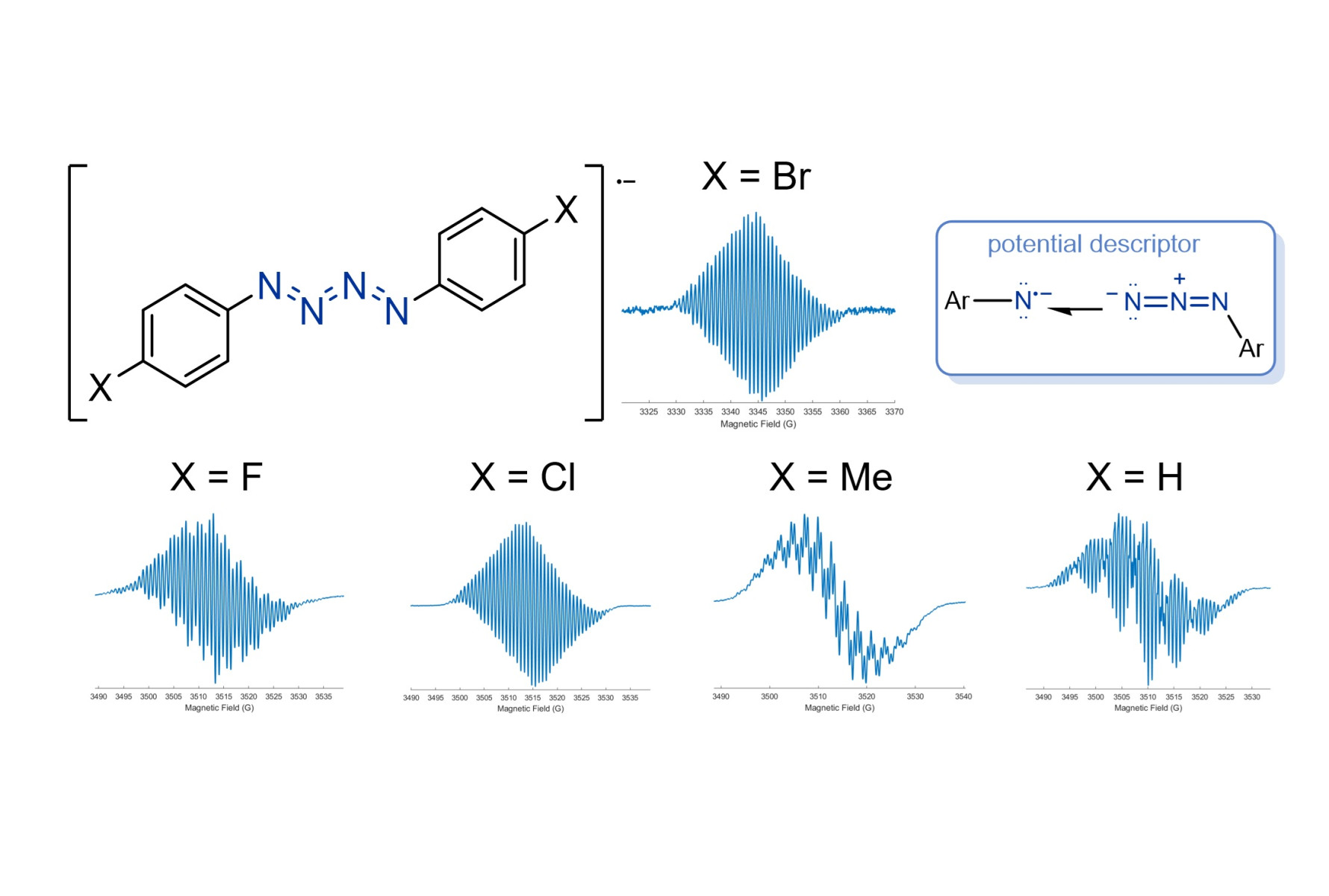
A team of scientists have synthesised a series of radical anions containing a rare four-atom nitrogen chain.
Nitrogen is generally reluctant to form extended chains, largely because the N≡N triple bond is significantly stronger than N–N single or double bonds. As a result, radical anions based on four‑atom nitrogen chains have been especially difficult to isolate, typically requiring extreme environments such as those found high in the Earth’s atmosphere.
In findings, published in , researchers from the Universities of Manchester and Oxford have now demonstrated that a series of compounds containing {N₄}•– units can be reliably synthesised and characterised. The team prepared five distinct molecules, which showed surprising stability under ambient conditions, with one remaining intact in the solid state for several weeks.
“Linear chains of nitrogen atoms have fascinated scientists for decades because of their unusual properties and potential applications. However, they are notoriously unstable. Using a combination of spectroscopic, crystallographic and computational techniques, we have been able to probe the bonding within these chains and understand how they are stabilised.
“The work sheds light on how nitrogen atoms can link together despite their natural tendency to favour simpler, more stable configurations.”
Further reactivity studies revealed that these chains can fragment into N₁ and N₃ species, and can also serve as a source of nitrene radical anions.
Detailed analysis showed how the nitrogen chain can break into smaller fragments, specifically single‑atom (N₁) and three‑atom (N₃) units. The researchers also found that these chains can act as a source of highly reactive nitrene radical anions.
These findings provide new insight into the fundamental chemistry of nitrogen and demonstrate ways to control its reactivity under realistic conditions.
Nitrogen chains are considered high‑energy‑density materials because they can release significant energy when they decompose into nitrogen gas. This property has long made them attractive for applications such as propellants, explosives, and gas‑generating systems.
The ability to isolate and stabilise such molecules under ambient conditions could allow scientists to explore their use as “storable” reagents for transferring nitrogen groups in chemical reactions
Beyond applications, the research offers a rare glimpse into a type of chemistry that plays a role in extreme environments, including the upper atmosphere where nitrogen chain ions have been detected.
By recreating and stabilising these species in the laboratory, scientists can now investigate their properties in far greater detail, providing insights relevant to fields ranging from atmospheric chemistry to planetary science.
This research was co-led by with Professor Meera Mehra, the University of Oxford, in collaboration with The University of Manchester’s , George F. S. Whitehead, , and, and Oxford’s Bono van IJzendoorn. First author was Oxford’s Reece Lister-Roberts.
Paper details:
Full title: Crystalline nitrogen chain radical anions
Journal: Nature Chemistry
DOI: 10.1038/s41557-025-02040-2
URL: