Scientists rule out fourth neutrino in physics mystery
Scientists have taken a major step toward solving a long-standing mystery in particle physics, by finding no sign of the particle many hoped would explain it.
An international collaboration of scientists, including from The University of Manchester, working on the experiment at the U.S. Department of Energy鈥檚 Fermi National Accelerator Laboratory announced that they have found no evidence for a fourth type of neutrino, known as a sterile neutrino.
For decades, physics experiments have observed neutrinos - sub-atomic particles that are all around us - behaving in a way that doesn鈥檛 fit . One of the most promising explanations was the existence of a sterile neutrino, named because they are predicted not to interact with matter at all, whereas other neutrinos can. This means they could pass through the Universe almost undetected.
Using a highly sensitive detector called MicroBooNE, sitting on two different neutrino beams, the researchers observed how thousands of neutrinos behaved over several years. If the fourth neutrinos existed, it would have left a clear fingerprint. The result, published today in the journal , shows there was no evidence and rules out a single sterile neutrino explanation with 95% certainty.
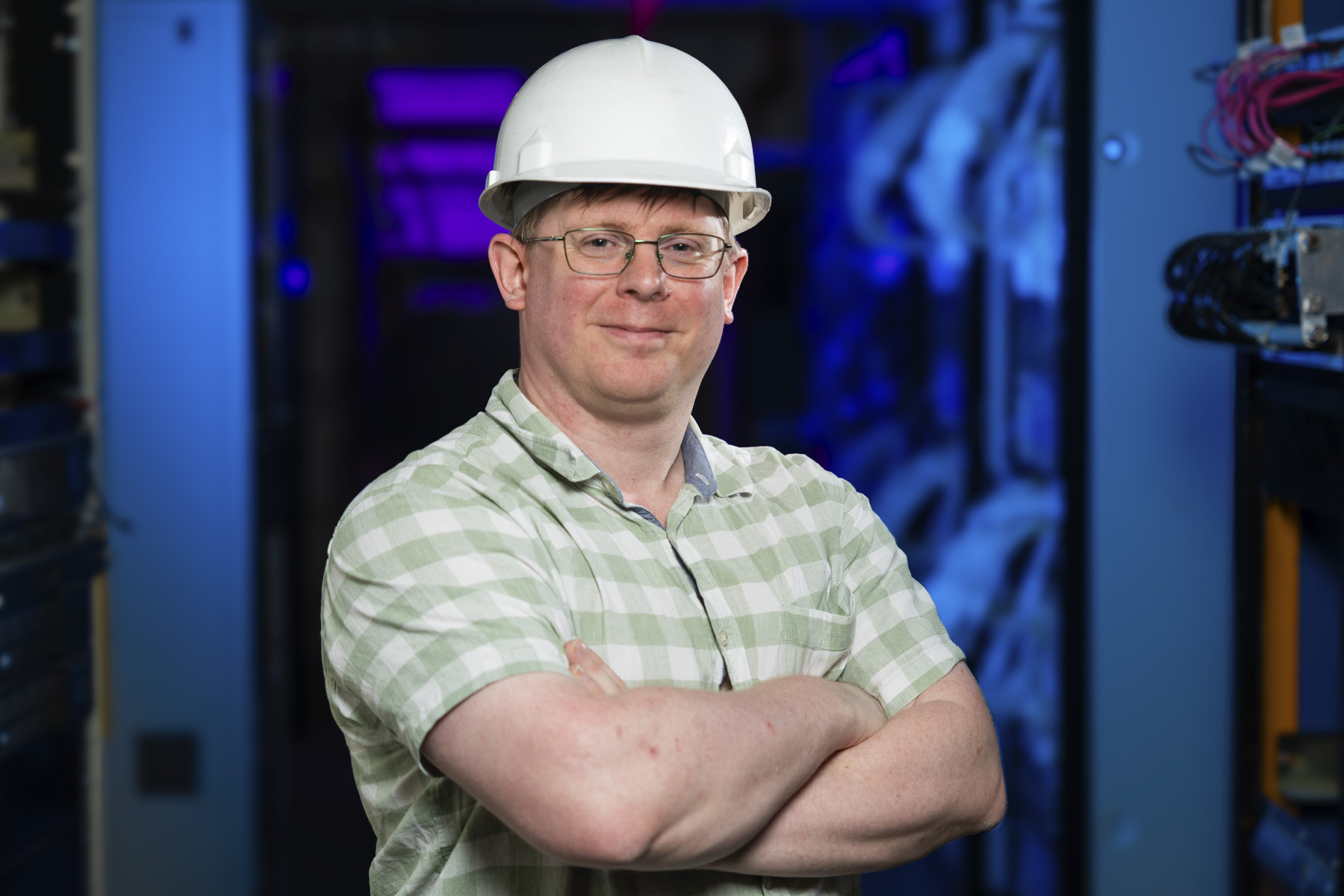
Professor of Particle Physics at The University of Manchester and co-spokesperson for MicroBooNE, said: 鈥淎ny time you rule out one place where physics beyond the Standard Model could be, that makes you look in other places. This is a result that is going to really spur a creative push in the neutrino physics community to come up with yet more exciting ways of looking for new physics. Sometimes, science is just as much about what you don鈥檛 find as what you do."
The University of Manchester played a leading role in the breakthrough. Dr Elena Gramellini was the driving force behind the experiment鈥檚 physics programme using the NuMI beam - a crucial part of the analysis behind this result. Professor Roxanne Guenette was one of the originators of MicroBooNE鈥檚 short-baseline oscillation programme, helping to shape the strategy used to investigate the sterile-neutrino question. The new paper builds directly on that foundational work.
Neutrinos come in three known types, or flavours: muon, electron and tau. They can change from one type to another as they travel. But this flavour-flipping cannot fully be explained by the current Standard Model.
Some earlier experiments - - also made observations suggesting that muon neutrinos were oscillating into electron neutrinos over shorter distances than should be possible.
鈥淭hey saw flavour change on a length scale that is just not consistent with there only being three neutrinos,鈥� explained , 鈥淎nd the most popular explanation over the past 30 years to explain the anomaly is that there鈥檚 a sterile neutrino.鈥�
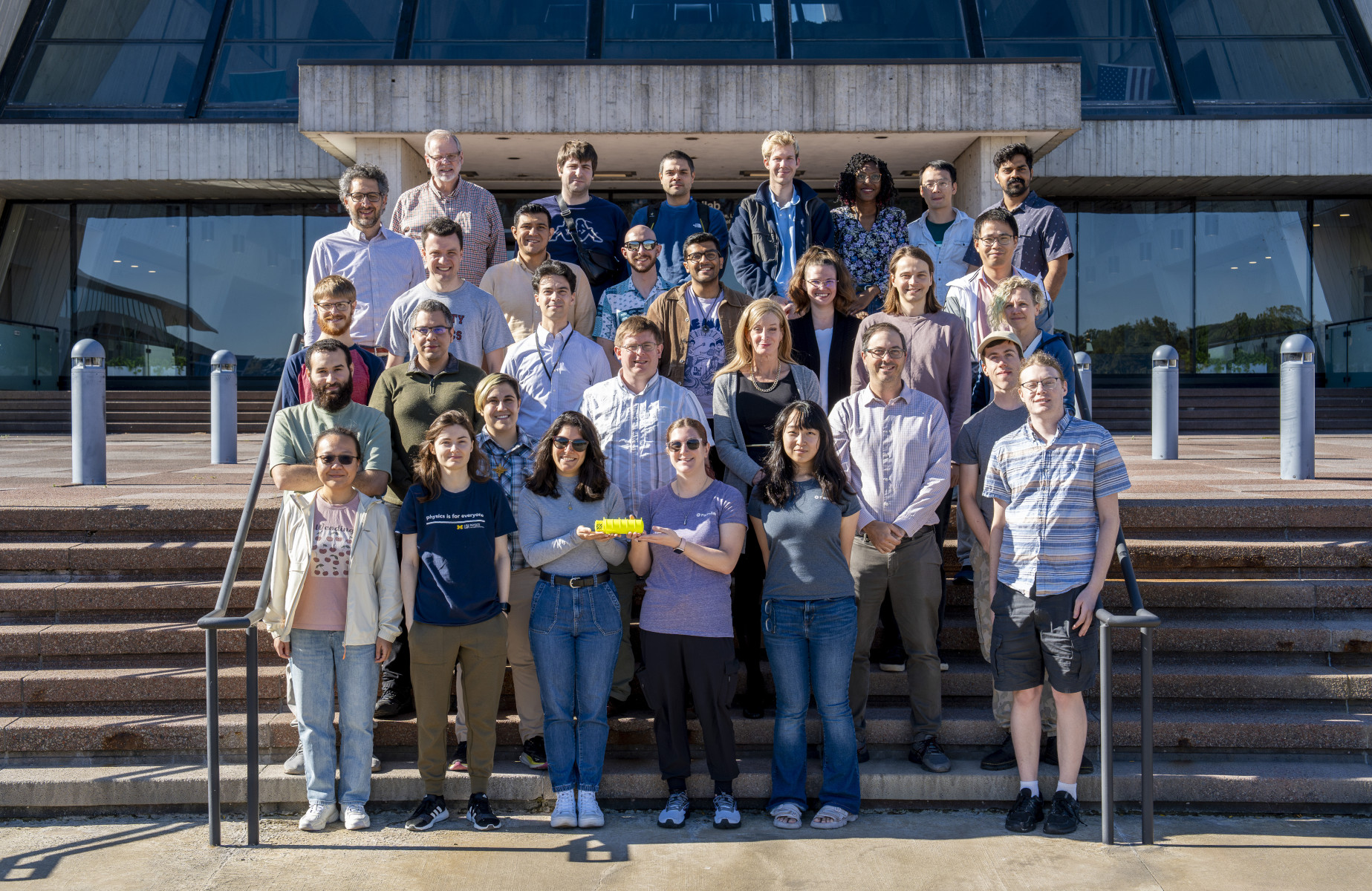
The experiment collected data from 2015 to 2021, observing neutrinos from Fermilab鈥檚 Booster Neutrino Beam and the NuMI beam. MicroBooNE is the first experiment that has done a sterile neutrino search with one detector and two beams simultaneously. This reduces the uncertainties in MicroBooNE鈥檚 result, making it possible to exclude nearly the entire favoured region in which a single sterile neutrino could be hiding.
Although this result rules out one explanation for anomalies seen in neutrino behaviour, the mystery itself remains. Scientists are now analysing the remaining MicroBooNE data and other experiments in the Short-Baseline Neutrino Program are also on the case.
In addition to the search for new physics, the MicroBooNE collaboration is providing insight into how neutrinos interact in liquid argon, an important metric that will benefit other liquid-argon time projection chamber experiments such as the .
Matthew Toups, Fermilab senior scientist and co-spokesperson for MicroBooNE, said: 鈥淚t鈥檚 really exciting to be doing both cutting-edge science that has a major impact on our field as well as developing novel techniques that will support and enable future scientific measurements.鈥�
This research has been published in the journal
Full title: Search for light sterile neutrinos with two neutrino beams at MicroBooNE
DOI: 10.1038/s41586-025-09757-7
URL:
The University of Manchester is globally renowned for its pioneering research, outstanding teaching and learning, and commitment to social responsibility. We are a truly international university 鈥� ranking in the top 50 in a range of global rankings 鈥� with a diverse community of more than 44,300 students, 12,800 colleagues and 585,000 alumni. Sign up for our e-news to hear first-hand about our international partnerships and activities across the globe.