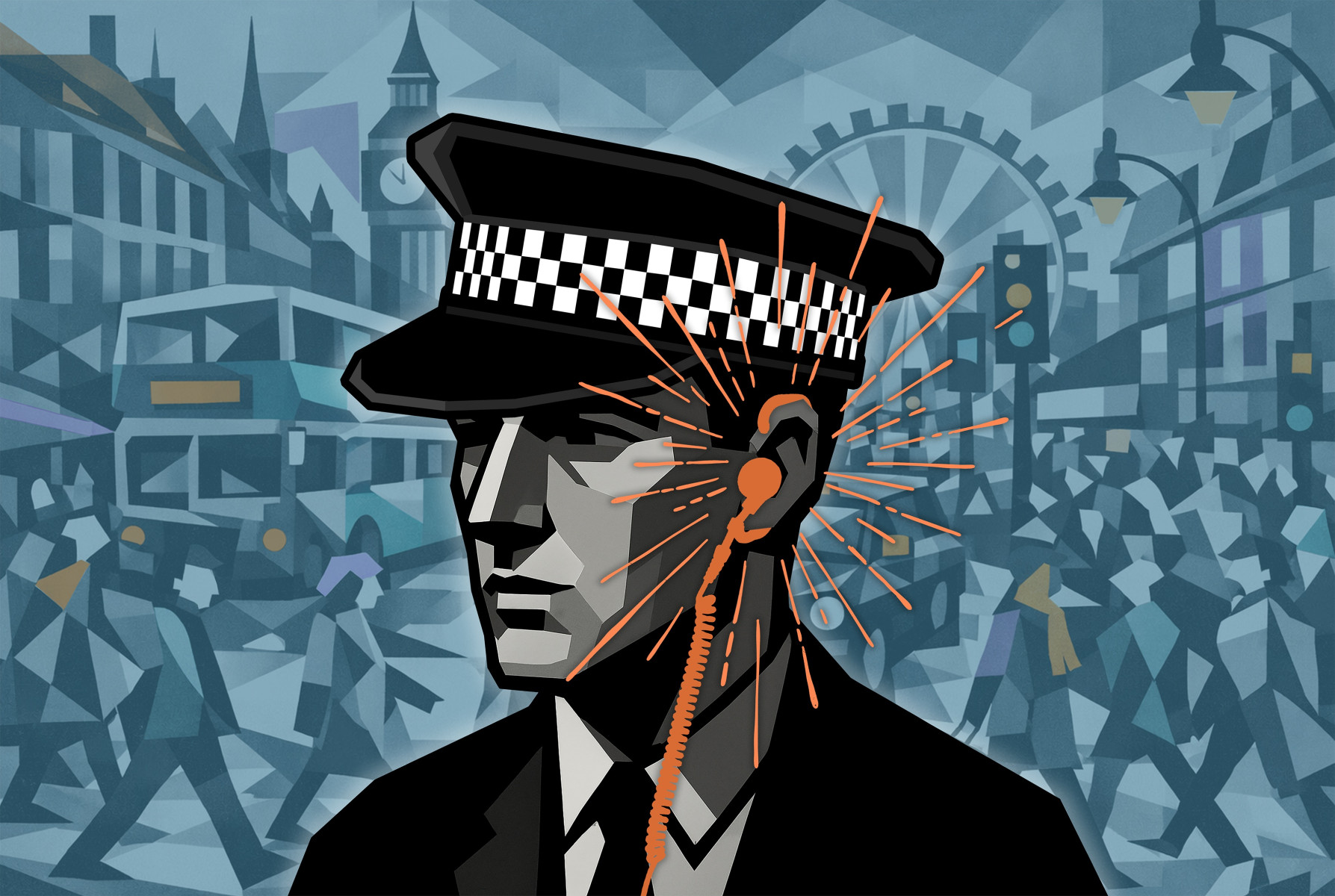
Radio ear-pieces linked to hearing problems in UK police officers
The radio ear-pieces worn by police officers may be harmful to their hearing, according to a large online survey by University of Manchester hearing researchers.
Published in , the study was mainly funded by the Medical Research Council. Respondents were members of a long-term project on police health at Imperial College London, which also provided infrastructure support for the survey.
Most UK police officers wear an ear-piece in one ear. The devices are capable of high sound levels so that they can be heard over background noise. Past reports have emphasised that officers must choose low volume-control settings to protect their hearing.
Until now, there has been no research into the volume settings actually used, or their effects on hearing health.
The University of Manchester researchers asked 4,498 UK police personnel about their volume-control settings, patterns of ear-piece use, immediate after-effects, and long-term hearing symptoms.
Over 45% of ear-piece users reported experiencing signs of temporary hearing loss (muffled hearing or ringing in their ear) immediately after using an ear-piece. These after-effects were more common in police who used higher volume-control settings.
Even more important were links to long-term hearing problems. Ear-piece use accompanied by immediate after-effects more than doubled an officer鈥檚 risk of having tinnitus (spontaneously ringing ears, which can indicate permanent hearing damage). It also raised the risk of having diagnosed hearing loss by 93%.
Crucially, symptoms were much more common in the ear with the ear-piece than the opposite ear, increasing the likelihood that hearing problems were directly linked to ear-piece use.
The project鈥檚 senior advisor, Professor Chris Plack of The University of Manchester, said: 鈥淚t鈥檚 not unusual to experience signs of temporary hearing loss after being in extremely noisy environments, such as nightclubs or concerts. For police to experience these after-effects in the workplace is concerning.鈥�
The lead researcher, of The University of Manchester, said: 鈥淲e were surprised that ear-piece use with after-effects was so strongly linked to long-term hearing symptoms. And the fact that symptoms tended to appear in the exposed ear, rather than the opposite ear, is a particularly telling finding.鈥�
We were surprised that ear-piece use with after-effects was so strongly linked to long-term hearing symptoms. And the fact that symptoms tended to appear in the exposed ear, rather than the opposite ear, is a particularly telling finding
But Dr Guest cautioned: 鈥淚t鈥檚 important not to over-interpret our results, since they are based on survey responses. Going forward, laboratory hearing tests are needed to confirm whether ear-piece users have measurable differences between their ears.
鈥淭hese should include standard clinical hearing tests, like those used by NHS audiologists, but also tests that are sensitive to the early warning signs of hearing damage.鈥�
Professor Plack said: 鈥淲e also need to understand why officers choose such high volume-control settings. This knowledge could help us find ways to reduce risks to police hearing, such as improved ear-piece technology, training for officers on safe use, and increased monitoring of hearing health.
鈥淥ur data aren鈥檛 the final word, but they are a notable discovery that warrants further investigation. They point to the need not only for follow-up laboratory testing but also for practical steps to reduce long-term risk.鈥�
Dr Guest added: 鈥淲e are pleased that key groups within UK policing - including the Disabled Police Association and the Police Chief Medical Officer - have been open to discussing our findings and are keen to explore measures to protect police hearing.鈥�
- The paper, Leveraging monaural exposures to reveal early effects of noise: Evidence from police radio ear-piece use, is published at
- Simple visualisations of the key study findings are available for media professionals and the public at