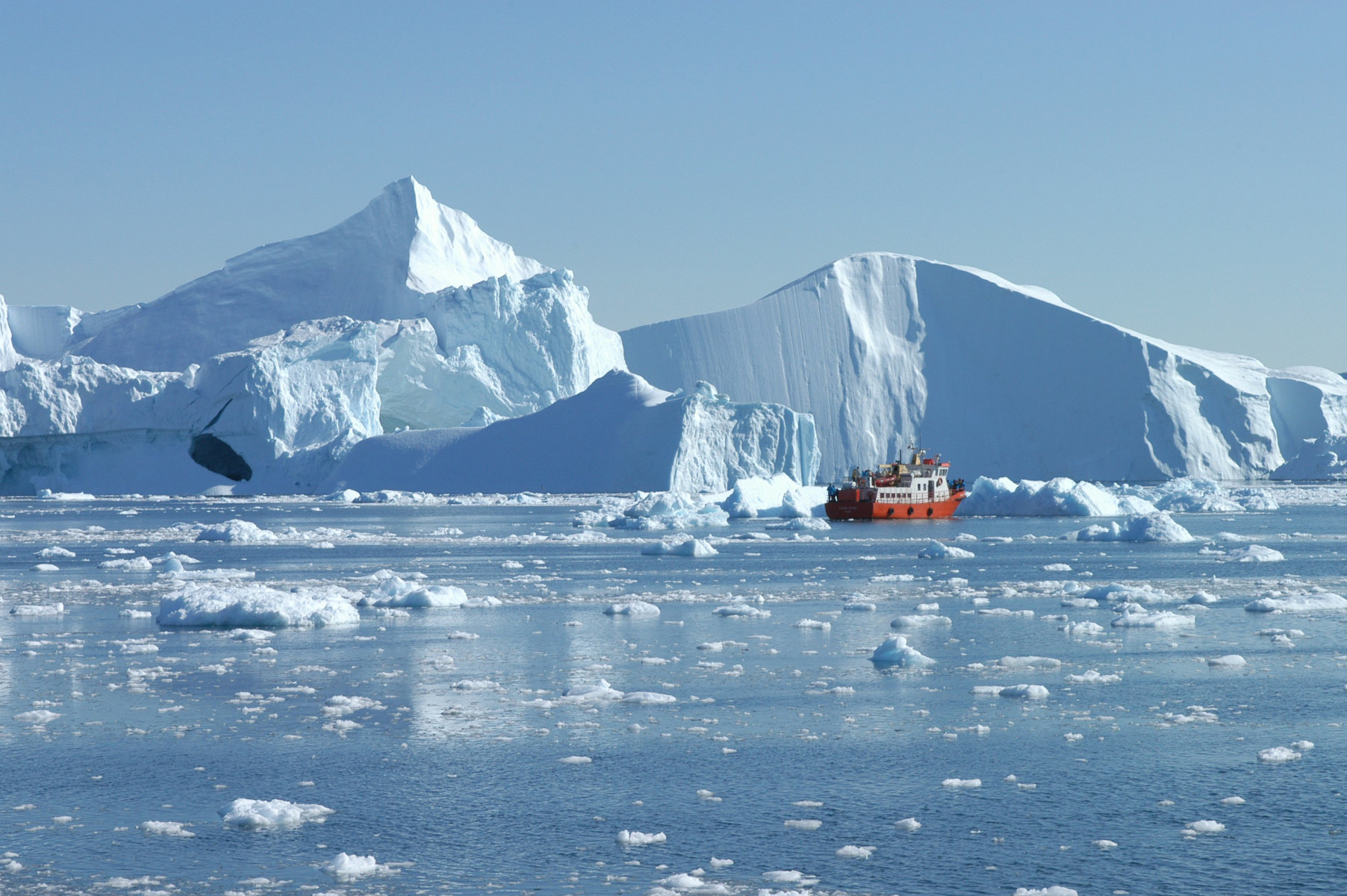
New research reveals rapid methane release mechanism at the front of retreating ice sheets
An international team of scientists has discovered that methane hydrates beneath the northwest Greenland continental shelf became rapidly destabilised by meltwater, releasing large stores of methane during ice-sheet retreat across the continental shelf.
The findings, published in , suggest that this fast鈥�acting mechanism may have contributed to past climate events and could well contribute to future climate change as polar ice sheets continue to retreat.
The study draws on samples collected during the International Ocean Discovery Program (IODP) Expedition 400, one of the final missions of the decades long鈥�running global marine research programme. By analysing sediment cores drilled offshore in northwest Greenland, researchers found unexpectedly low methane concentrations in layers where methane hydrates would normally be abundant.
High鈥�resolution 3D seismic imaging revealed widespread pockmarks and fluid鈥�escape structures on the seafloor, indicating that methane鈥�rich fluids had once migrated rapidly through the sediments. The evidence points to a striking conclusion, methane hydrates in this region were locally dissolved and flushed out by large volumes of meltwater during the last glacial cycle.
鈥�The findings from drilling the NW Greenland shelf were initially confusing, but when the penny dropped that the pockmarks were linked with the absence of methane in the subsurface, it highlighted the importance of meltwater very effectively flushing out the methane from the upper parts of the subsurface.鈥�
Scientists have long suspected that rapid methane release from destabilised hydrates may have played a role in major climate events in Earth鈥檚 history, including the Palaeocene鈥揈ocene Thermal Maximum (PETM) around 56 million years ago. During this period, global temperatures rose by 5鈥�8掳C, triggering ocean acidification, species extinctions, and widespread environmental disruption. Although the Greenland findings relate to a much more recent period, they reveal a mechanism capable of producing similarly abrupt methane release under the right conditions.
Methane hydrates, ice鈥�like solids that trap methane within a crystalline structure, typically form under low鈥�temperature, high鈥�pressure conditions known as stability zones, typically found beneath permafrost or in deep鈥�sea sediments.
Approximately 1,800 Gigatons of methane is stored in gas hydrates beneath continental margins and permafrost, making them one of the largest methane reservoirs in the global carbon cycle and a massive potential greenhouse gas source.
Until now, destabilisation was thought to occur mainly through slow changes in temperature or pressure. The new findings reveal that meltwater鈥�driven dissolution can rapidly destabilise hydrates even within gas hydrate stability zones, previously thought of as safe stores of methane.
As ice sheets continue to thin and retreat, this newly identified process could influence the timing and magnitude of future methane emissions and shape the trajectory of climate change.
鈥淭he scale of what we see in Melville Bay is remarkable. Our results suggest that a very large store of methane hydrate may have been flushed out over a short geological period. Because methane has such a strong greenhouse effect, this kind of release could matter well beyond the seafloor. As Greenland currently produces more meltwater in a warming climate, this gives us a warning from the past.鈥�
Paper details:
Full title: Gas hydrate dissolution triggered by subglacial groundwater flushing during deglaciation
Journal: Nature Geoscience
DOI: 10.1038/s41561-026-01978-3
URL: