Campaign results in right to work for health professional asylum seekers
The UK Government has announced a significant change to immigration rules which will allow some asylum-seeking doctors, nurses and other health professionals to work in the UK.
It follows a campaign led by a national coalition of partners, including academics from The University of Manchester, and legal representatives from Garden Court Chambers and Bhatt Murphy Solicitors, who challenged the previous policy framework.
The rules, which affect asylum seekers who have waited 12 months or more for a decision on their initial claim, come into effect on 26 March 2026.
The previous policy restricted asylum seekers to occupations on the Immigration Salary List, excluding most health professions, including doctors and nurses.
One of the leading voices in the campaign was the Refugee and Asylum Seekers Centre for Healthcare Professionals Education (REACHE), directed by, Dr Aisha Awan, a Senior Clinical Lecturer at The University of Manchester and Northern Care Alliance NHS Foundation.
Displaced clinicians at REACHE receive specialist language, clinical and acculturation training alongside strong pastoral support, enabling them to secure regulatory registration and safely return to practice within the NHS.
The policy change follows legal proceedings which highlighted that highly qualified, NHS-ready clinicians were unable to work in shortage specialties despite clear workforce need.
Dr Awan said: 鈥淎s we continue to witness increasing displacement of people by conflict and global events, we must ethically address that doctors, nurses and health professionals becoming deskilled is a huge loss to humanity.
鈥淎longside being economically counterproductive, undermining NHS workforce capacity and negatively impacting mental health and integration.
鈥淎t a time of increasingly hostile rhetoric around migration, it鈥檚 been important to show the impressively positive impacts of this programme on the NHS and patients.
鈥淚鈥檓 immensely proud to be part of our University which supports this sort of positive and impactful change. Our success demonstrates how evidence, persistence and coalition-building can influence systems, no matter how big the resistance to change.鈥�
Undergraduate students from the University鈥檚 school of Law, Medicine, Computer Sciences and Languages were involved in the Interfaculty Service Learning project, attending the judicial review hearings.
Maria-Ioana Dicu a second year computer science undergraduate, was one of the undergraduates to observe how research, evidence and advocacy connect within real-world policy debates.
She said: 鈥淭hese doctors resilience and desire to help others was incredibly powerful and their fight to practice shows the impact you can have if you step outside your comfort zone, even against all the odds.鈥�
I鈥檓 immensely proud to be part of our University which supports this sort of positive and impactful change. Our success demonstrates how evidence, persistence and coalition-building can influence systems, no matter how big the resistance to change
Aaron Drovandi, Senior Lecturer in Medical Education Research at The University of Manchester, who was involved in the data and evaluation for REACHE said: 鈥淭he team have achieved tremendous impact on international debate and national policy, with the work being acknowledged by a broad range of stakeholders including the British Medical Association and World Health Organisation.鈥�
Stephanie Harrison KC, Garden Court Chambers, said: 鈥淥ur clients were highly qualified doctors who wished to provide their skills to NHS patients in need. One of our clients was able to take up a role that had remained unfilled for over a year. This is an important step but the full removal of restrictions still recommended. It is important that policy is guided by reason and compassion, recognising both the contribution individuals can make and the wider needs of society.鈥�
Becky Hart, from Bhatt Murphy Solicitors, said: 鈥淲e are glad the Secretary of State has agreed to amend her policy to expand the jobs those claiming asylum can work in鈥� to include doctors, nurses, and other skilled occupations.鈥�
Professor Nalin Thakkar, Vice-President (Social Responsibility), at The University of Manchester said: 鈥淲e are proud to have played a part in this success, which is a powerful illustration of how The University of Manchester values social responsibility and interdisciplinary collaboration.
鈥淚t also reflects our obligation, as a university, to act ethically, contribute positively to society, and prepare students not only academically but also as responsible global citizens. It is a concept that connects education with real-world impact, so that we do not exist in isolation but actively shape a better future.鈥�
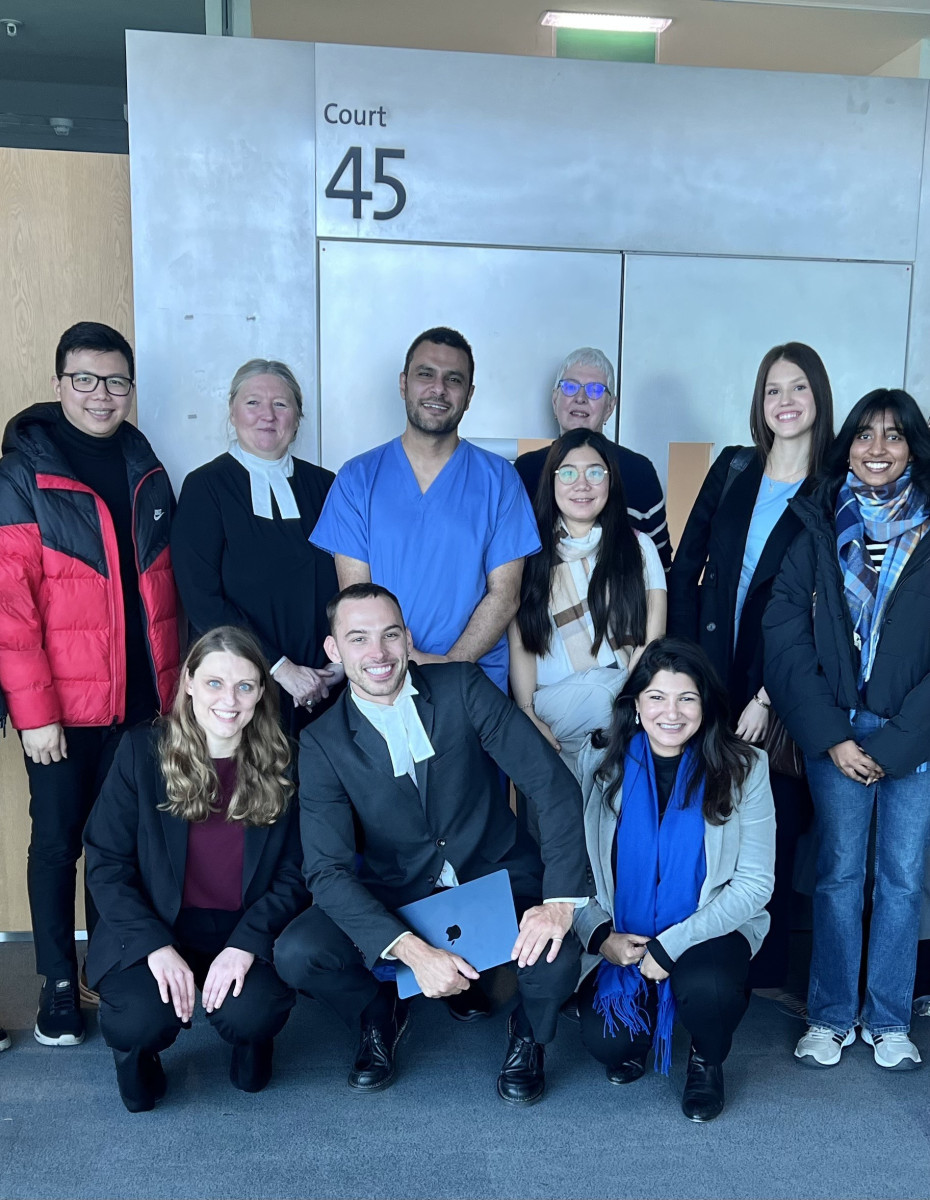
Image from left to right:
Front Row: Becky Hart Solicitor Bhatt Murphy; Isaac Ricca-Richardson KC Garden Court Chambers; Aisha Awan Senior Clinical Lecturer UoM, Director of REACHE
Back row: REACHE Doctors; Stephanie Harrison KC Garden Court Chambers; Maeve Keaney - REACHE Founder; Maria-Ioana Dicu - UoM Yr 2 Computer Science Undergraduate, Faculty of Science and Engineering; Dorothy Anand - UoM Yr 2 Law Undergraduate, Faculty of Arts